

If antidepressants have not done what they promised then you are not alone, and you are not out of options. Ketamine therapy is quietly changing what is possible for people with treatment-resistant depression, and providers like Holme Wellness are bringing it to NYC in a way that actually feels like care.
For many people, ketamine therapy represents the first meaningful relief they have experienced after years of trying different medications, therapy approaches, and treatments. Understanding what to expect before your first session can make a significant difference in how you experience it.
Keep reading to know more about Ketamine Therapy NYC for Depression
What Is Ketamine Therapy?
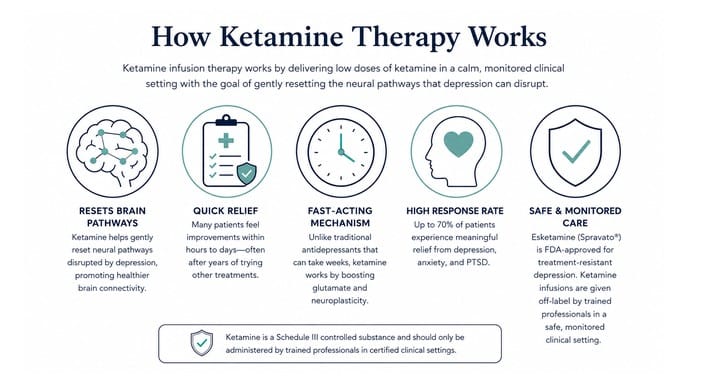
Ketamine infusion therapy works by delivering low doses of ketamine in a calm, monitored clinical setting with the goal of gently resetting the neural pathways that depression can disrupt. Unlike traditional antidepressants that work on the serotonin system and can take weeks to show effects, ketamine is a dissociative anesthetic that blocks NMDA receptors, triggers a surge of glutamate across the nervous system, and stimulates neuroplasticity that helps repair pathways affected by chronic stress or depression. It will often produce results within hours or days of the first session.
It has been a real turning point for people dealing with depression, anxiety, and PTSD, with up to 70% of patients finding meaningful relief often after years of trying other things. Esketamine, marketed as Spravato, is the only fda approved nasal spray for treatment-resistant depression and must be given in certified, monitored settings. IV ketamine infusions are widely used off-label with strong clinical evidence supporting their effectiveness, and ketamine is a Schedule III controlled substance that should be administered by trained professionals in clinical settings.
Who Is Ketamine Therapy For?
Ketamine therapy is typically recommended for people who:
- Have tried two or more antidepressants without achieving adequate relief
- Experience depression that has not responded to therapy alone
- Are dealing with treatment-resistant depression, major depressive disorder, bipolar depression, or chronic depression, including persistent depressive symptoms that have not improved with standard care
- Struggle with suicidal ideation and need faster-acting relief than traditional medications provide
- Have anxiety or PTSD alongside depression
- May be appropriate candidates for chronic pain care in select cases, including difficult conditions such as CRPS and neuropathic pain
- Ketamine treatment is also being explored for obsessive-compulsive disorder and certain eating disorders, particularly in complex cases where conventional approaches have fallen short
A consultation with the Holme Wellness team will determine whether ketamine therapy is appropriate for your specific situation through a review of your medical history and current symptoms. Not everyone is a candidate; people with certain medical conditions, a history of psychosis or active substance abuse, or uncontrolled blood pressure may not be suitable. Some uses beyond depression remain under study and require further research.
What Happens During a Ketamine Infusion Therapy Session?
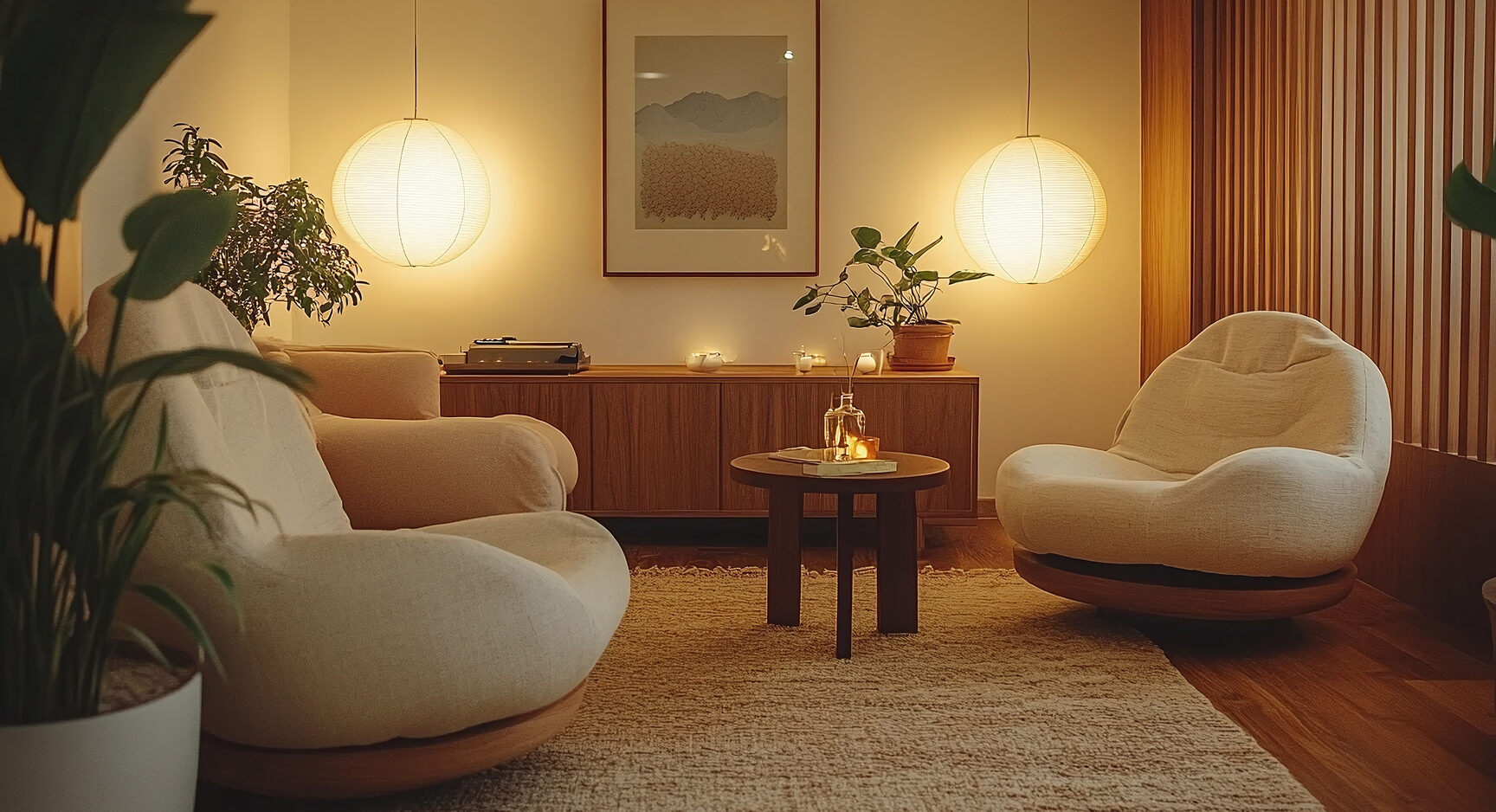
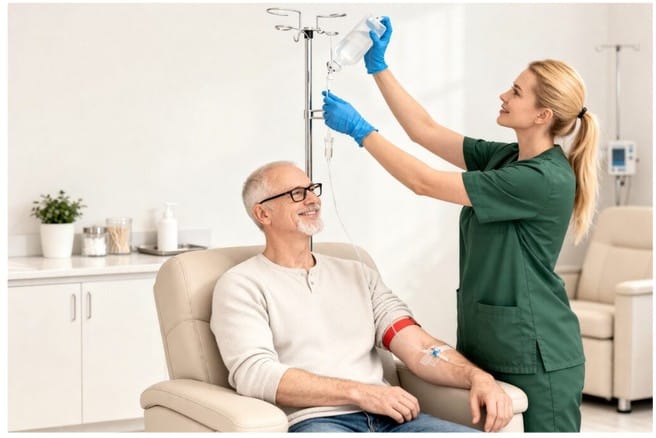
Each ketamine therapy session here is delivered by IV, although ketamine can also be given by IM, oral, sublingual, nasal, or rectal routes, with IV generally considered the most effective. Each infusion runs approximately 56 minutes. IV also has a rapid onset compared with IM and allows more tailored dose control during treatment. You will be awake and gently monitored throughout by a clinical team. The setting is designed to feel calm and supportive, with low lighting, comfortable positioning, and a quiet environment.
Some people notice soft visual or sensory shifts during the infusion. As a dissociative anesthetic, ketamine can cause dissociative effects that feel like detachment from the body or a dream-like state, though this varies from person to person. This is completely normal and actually part of how ketamine does its therapeutic work. The altered state of consciousness facilitates the neural reset that produces lasting mood improvements.
After the infusion, you might feel a little sleepy. Some people experience mild nausea, a headache, elevated blood pressure, or changes in heart rate, but these typically pass within a few hours. You will rest briefly at the clinic before leaving.
Treatment length can vary by protocol, and in some settings, infusions may last a few hours or be spread over several days.
Important preparation notes:
- Arrange a driver to take you home; you cannot drive after a ketamine infusion
- Be mindful about drinking or eating before your session, some individuals may experience nausea.
- Avoid major decisions, alcohol, or recreational substances until the following morning
- Wear comfortable clothing and bring anything that helps you feel relaxed, we do have a bluetooth speaker if music helps set the mood.
Ketamine should only be used under strict medical supervision, since misuse and addiction risk are higher outside clinical care, especially for people with a history of drug addiction.
How Many Sessions Do You Need?
Most people go through an initial series of six infusions, paced and tailored around how you are responding and what you are working toward. Sessions are typically scheduled over two to three weeks for the initial series.
Many people find that the initial series brings lasting relief, sometimes for the first time in a long time. After the initial series, some people benefit from maintenance infusions every few weeks or months to sustain the effects. Your clinical team at Holme Wellness will work with you to determine the right schedule based on your response.
How Does Ketamine Compare to Other Treatments for Treatment-Resistant Depression?
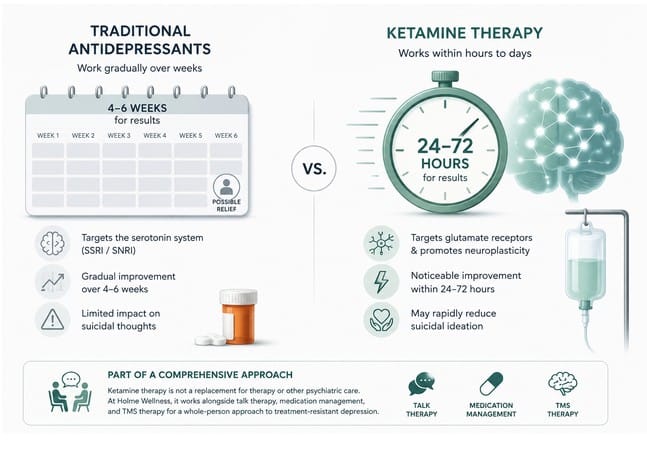
The main differences between ketamine and traditional antidepressants are speed and mechanism. Traditional SSRIs and SNRIs work gradually over four to six weeks and affect the serotonin system. Ketamine works on glutamate receptors and can produce a noticeable improvement within 24 to 72 hours of the first session.
For people who have spent years cycling through medications that did not work, this speed can be life-changing. Ketamine also appears to have a different mechanism of action for suicidal ideation, often producing a rapid reduction in those thoughts where standard medications have struggled.
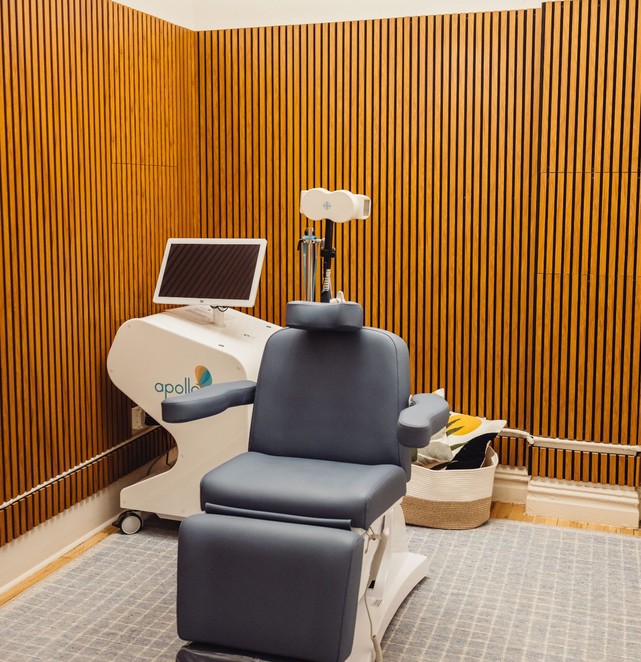
Ketamine therapy is not a replacement for therapy or other psychiatric care. At Holme Wellness, it works alongside our broader mental health offerings, including talk therapy, medication management, and TMS therapy for a whole-person approach to treatment-resistant depression.
Why Holme Wellness for Ketamine Therapy in NYC?
Holme Wellness is an integrative mental health clinic in NYC’s Flatiron district. Our team includes board-certified psychiatrists who specialize in treatment-resistant depression and oversee every ketamine infusion in a safe, clinical setting.
What sets Holme Wellness apart is the integrative approach. Ketamine therapy does not exist in isolation here it sits alongside TMS therapy, psychiatry, nutrition, yoga, and wellness services. This means your care is coordinated across providers who communicate with each other, giving you the best possible foundation for lasting recovery.
We welcome new patients and offer consultations to determine whether ketamine therapy is the right next step for you.
Ready to find out if ketamine therapy is right for you? Book a consultation with Holme Wellness.
Frequently Asked Questions
Is ketamine therapy safe?
Yes, when administered by trained clinical professionals in a monitored medical setting. At Holme Wellness, every infusion is supervised by our psychiatric team. Ketamine has been used safely in clinical settings for decades and has a well-established safety profile at therapeutic doses.
How quickly will I feel results from ketamine therapy?
Many patients notice improvement within 24 to 72 hours after their first infusion. Some experience a shift during the infusion itself. The timeline varies by individual, but ketamine acts significantly faster than traditional antidepressants which can take four to six weeks.
Does ketamine therapy work for anxiety and PTSD as well as depression?
Yes. While ketamine therapy is most widely studied for treatment-resistant depression, there is growing clinical evidence supporting its effectiveness for anxiety disorders and PTSD. Many patients with co-occurring depression and anxiety report improvement in both conditions. Your provider at Holme Wellness will assess your full picture during the consultation.
Will I be unconscious during a ketamine infusion?
No. Therapeutic ketamine infusions use low doses that produce a dissociative or altered state of consciousness, not full unconsciousness. You will be awake and aware throughout the session, though your perception of time, space, and sensation may feel different. The clinical team is present with you the entire time.
How long do the effects of ketamine therapy last?
After a full, initial series of six infusions, many patients experience relief that lasts weeks to months. Some benefit from periodic maintenance infusions to sustain the results. Individual response varies, and your Holme Wellness team will monitor your progress and adjust the schedule accordingly.
Does insurance cover ketamine therapy?
IV ketamine infusions are currently not covered by most insurance plans as they are used off-label for depression. However, esketamine nasal spray (Spravato) may be covered for treatment-resistant depression. Our team can discuss payment options and help you understand what may be available to you during your consultation.